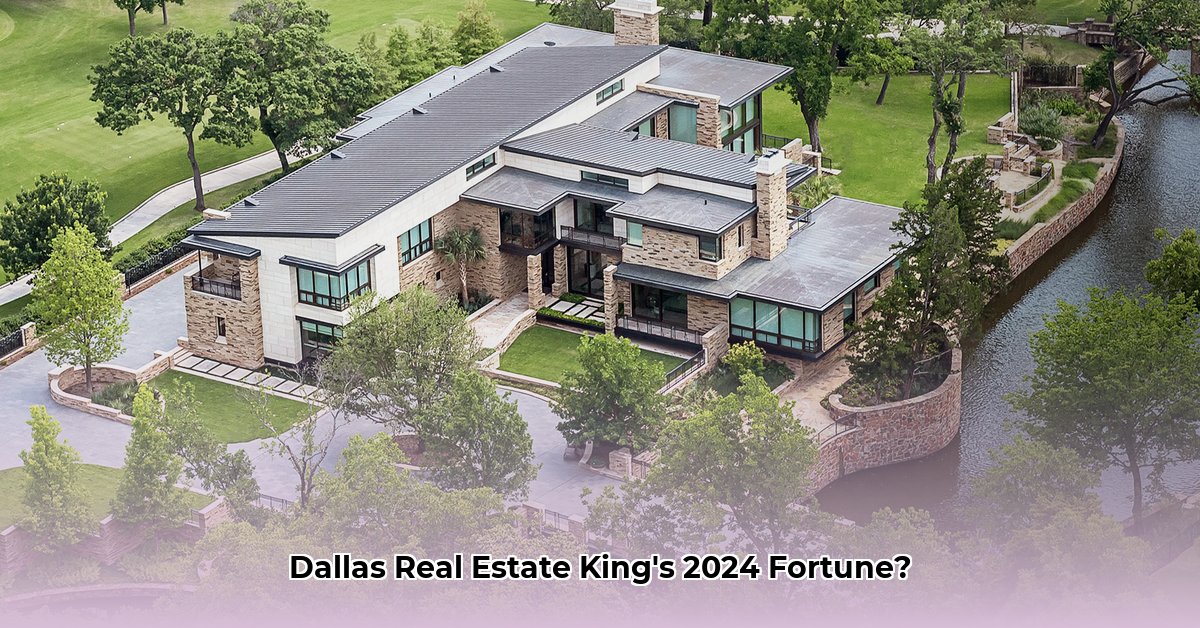
Dallas Real Estate Moguls: A 2024 Net Worth Analysis and Market Outlook
The 2024 Forbes 400 list provides a compelling snapshot of Dallas's wealthiest individuals, particularly those in real estate. While established figures like Alice Walton maintain prominent positions, reflecting the enduring power of legacy wealth, the rankings reveal a dynamic market characterized by both substantial growth and considerable volatility. For instance, learn more about Bill Duvall's Dallas net worth here. This analysis delves into the factors shaping this landscape and offers insights into the future of Dallas real estate wealth.
Decoding the 2024 Billionaire Scene in Dallas
The Forbes 400 offers a valuable, albeit estimated, view of Dallas-Fort Worth's billionaire landscape. It’s crucial to acknowledge that these net worth figures, while rigorously researched, represent approximations. Assessing the precise net worth of individuals with complex private holdings and diverse assets is an inherently challenging task. These estimates naturally fluctuate year to year, reflecting market dynamism.
External factors significantly impact these valuations. Oil price fluctuations, for example, directly influence the fortunes of energy-sector players. Similarly, interest rate adjustments affect borrowing costs and investment returns, adding another layer of complexity to net worth calculations.
The Energy Sector's Influence and the Importance of Diversification
The DFW area's economic ties to the energy industry are strongly reflected in the wealth concentration among Forbes 400 members. Significant industry events, such as the Diamondback Energy acquisition of Endeavor Energy Resources, dramatically illustrate the sector's volatility and its impact on wealth rankings. However, many billionaires are actively diversifying beyond energy, recognizing that a diversified portfolio mitigates risk and creates greater financial stability.
The Future of Dallas Real Estate Wealth: Predictions and Possibilities
Predicting the future is inherently uncertain, but several likely scenarios emerge from current trends.
Key Stakeholder Outlooks:
| Stakeholder Group | Short-Term Outlook (Next 1-2 Years) | Long-Term Outlook (Next 3-5 Years) |
|---|---|---|
| High-Net-Worth Individuals | Diversification of assets; exploration of alternative investments. | Succession planning; establishment of family offices; increased philanthropic activities. |
| Energy Companies | Focus on efficiency; adaptation to evolving energy regulations. | Investment in renewable energies; strategies to navigate geopolitical shifts. |
| Financial Institutions | Specialized services for high-net-worth clients; cautious risk management. | Global expansion; innovative financial products focused on sustainability. |
| Texas Government | Monitoring the economic impact of energy price fluctuations; investment attraction. | Infrastructure development; investment in education to foster economic growth. |
The Dallas real estate billionaire scene is a complex and dynamic ecosystem. Market changes, often driven by external forces, necessitate ongoing adaptation and informed decision-making. The future likely involves further industry consolidation, increased diversification, and a greater emphasis on sustainable practices.
Diversifying High-Net-Worth Portfolios Beyond the Energy Sector in Dallas
Three Pivotal Points:
- Ultra-high-net-worth individuals are increasingly diversifying beyond traditional assets to create resilient portfolios.
- Real estate remains a core element of many portfolios, offering long-term growth and stability, particularly in the dynamic Dallas market.
- Strategic investments in technology (AI, cloud computing, semiconductors) and renewable energy offer growth potential, but require rigorous due diligence.
Strategies for Diversification: A Step-by-Step Approach
High-net-worth individuals must tailor their diversification strategies to the unique context of Dallas’s evolving economy.
Comprehensive Portfolio Assessment: Determine the current proportion of assets invested in the energy sector. This provides a baseline for strategic adaptation.
Risk Tolerance Determination: Establish your comfort level with high-risk, high-reward opportunities versus more conservative approaches. This governs the allocation of your resources.
Exploration of Alternative Asset Classes: Explore Dallas-specific commercial real estate, established technology companies, and renewable energy projects with substantial regulatory support.
Tax Optimization: Utilize strategies such as 1031 exchanges to minimize tax implications during asset reallocation. Seek expert tax advice.
Regular Portfolio Rebalancing: Regularly review and adjust your portfolio to reflect evolving market conditions and your personal financial goals.
Risk Mitigation in a Diversified Portfolio
| Asset Class | Risk Level | Mitigation Strategies |
|---|---|---|
| Dallas Real Estate | Medium – High | Geographic diversification; property type diversification; professional management |
| Technology | Medium – High | Diversification across multiple firms; focus on established companies; valuation monitoring |
| Renewable Energy | Medium | Diversification across technologies; thorough due diligence of regulatory environments |
Effective diversification is an ongoing process, requiring continuous monitoring, adaptation, and professional guidance to maintain a well-balanced portfolio aligned with your financial objectives. The dynamism of the Dallas real estate market underscores the importance of these strategies.